
There's a particular moment that seasoned travellers know well. You've navigated the airport, found the hotel, unpacked enough to feel settled—and then you take the lift to the top floor, step out onto a terrace, and the city arranges itself below you for the first time. The skyline, the neighbourhoods, the water if there is any, the hills if there are those. Everything you're about to spend the next few days exploring is suddenly legible as a whole.
That moment doesn't happen by accident. It happens because you chose to start there—up high, with a drink in hand and the city spread out in front of you before you've done anything else. And once you've experienced it properly, it becomes very difficult to plan a city trip any other way.
This is a guide to thinking about rooftop venues not as a nice-to-have addition to a travel itinerary, but as the architecture around which great urban travel is built.
Most travel advice focuses on what to do first: the museum, the famous street, the market. The implicit logic is that you learn a city by accumulating ground-level experiences—one neighbourhood, one restaurant, one square at a time.
That approach works. But it misses something that rooftop venues offer in a way nothing else does: immediate orientation. When you spend your first evening in a new city at an elevated vantage point, you gain a spatial understanding of the place that would otherwise take days of wandering to develop. Where is the historic centre relative to the modern business district? How does the waterfront relate to the rest of the city? Where are the green spaces, and where are the dense, walkable neighbourhoods you want to spend time in?
A rooftop bar on your first evening isn't indulgence—it's reconnaissance. The best travel days that follow are the ones where you already have a mental map, and a rooftop gives you that map in an hour that also happens to involve a good cocktail and, if the timing is right, one of the better sunsets you've ever seen.
One of the most interesting things about rooftop venues as a travel category is how dramatically they differ from city to city, reflecting something genuine about each place's character.
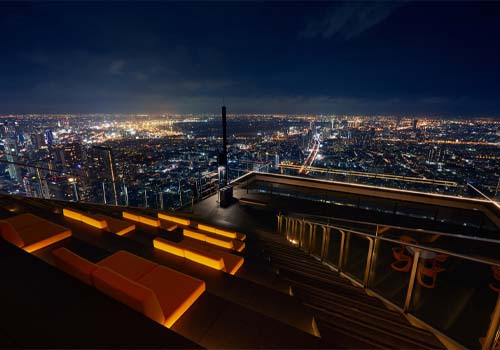
Bangkok has a rooftop culture built around spectacle. The elevated bars here—perched above one of Asia's most densely built skylines—are designed for drama. The views are genuinely vertiginous, the cocktails tend toward the theatrical, and the experience of standing above the city's heat and noise has a quality that's difficult to replicate anywhere else. Rooftops here are destination experiences rather than casual stops.
Barcelona approaches rooftops with the same unhurried sophistication it brings to everything. The best terraces here aren't trying to impress with altitude—they're designed for long, comfortable evenings that begin before sunset and continue well past it. The views of Gaudí's roofscape, the distant shimmer of the Mediterranean, the warm evening air—Barcelona's rooftops are about atmosphere as much as vista.
New York offers something else entirely: the feeling of being inside the skyline rather than looking at it from outside. The city is dense enough, and the buildings varied enough in height, that a good rooftop in Manhattan gives you the experience of being surrounded by architecture rather than above it. The Empire State Building is your neighbour, not your backdrop. That's a different kind of elevated experience, and arguably a more uniquely urban one.
Lisbon has perhaps the most democratic rooftop culture of any major European city. The miradouros—traditional viewpoints distributed across the city's seven hills—have trained Lisbon's residents and visitors alike to treat elevated perspectives as a normal part of city life rather than a luxury hotel amenity. The rooftop bars that have developed alongside this tradition feel accessible in a way that their counterparts in more expensive cities sometimes don't.
Travel today also extends beyond the places we visit to the ways we unwind after a day of exploring. While many visitors end the evening with a rooftop cocktail or a leisurely dinner, others choose digital entertainment back at their hotel, with platforms such as FairCrown becoming one of many options people use to relax after a full day of sightseeing.
Understanding these differences before you travel makes you a better visitor. You choose the right venues for the right moments rather than approaching every rooftop as interchangeable.
Every experienced rooftop traveller has a considered opinion about sunset timing, and it's worth developing yours early.
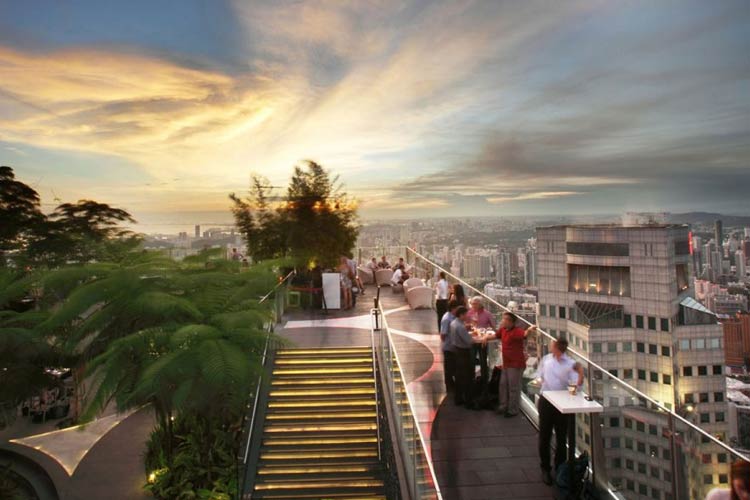
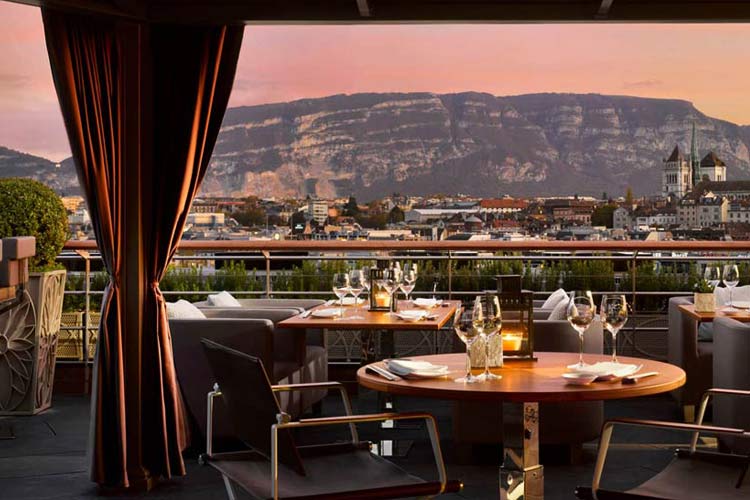
The golden hour—the period from roughly forty-five minutes before sunset through the fifteen minutes after—is when most city skylines look their best, and when most rooftop venues are at their most crowded. The light softens the hard edges of urban architecture, the sky changes colour in a way that no other time of day produces, and there's a collective mood at a well-positioned rooftop terrace during this period that's genuinely hard to describe to someone who hasn't experienced it.
But the hour immediately after sunset is often better for the experience itself, if not for the photographs. The crowds thin slightly, the sky transitions through shades of deep blue that are just as beautiful as the orange and pink that preceded them, and the city's artificial lights begin to emerge, creating a different but equally compelling visual spectacle.
The practical implication: arrive at your chosen rooftop earlier than you think you need to, secure a position with an unobstructed westward view, and stay longer than the moment the sun disappears. The show continues.
There's a rhythm to rooftop-centred travel that becomes intuitive once you've done it a few times. Here's how it typically looks:
Day one, late afternoon: Arrive, check in, and head immediately to a rooftop with a panoramic city view. Don't plan anything else for the evening—just orient yourself, understand the city's geography, and let the first impression settle. This is reconnaissance, not tourism.
Mid-trip days: Use rooftops as transition points between other activities. A morning at a museum can flow into lunch at a rooftop restaurant with views that change how you think about the neighbourhood you've just been exploring. An afternoon of walking segues naturally into early evening drinks at a terrace with a good sunset position.
Final evening: Return to a rooftop for the city in a different light—both literally and experientially. The skyline you surveyed on arrival looks different after you've walked its streets, eaten its food, and spent time in its neighbourhoods. The elevated perspective is the same, but your relationship to what you're seeing has changed. That comparison—the view you saw on arrival versus the view you see on departure—is one of the more satisfying moments in urban travel.
Not all rooftops are equal, and with the category growing rapidly in most major cities, the ability to distinguish between venues worth your time and those that are simply banking on altitude has become a genuine travel skill.
Orientation matters more than height. A rooftop at the twelfth floor facing west with an unobstructed view of the city's historic skyline is usually more interesting than one at the thirtieth floor facing a blank wall of glass towers. Research the direction before you book.
Crowd dynamics are different from ground-level venues. A packed rooftop bar in peak summer is a qualitatively different experience from a packed ground-floor bar—the space is almost always more constrained, the noise bounces differently in open air, and getting to the railing requires more navigation. Shoulder hours—late afternoon on weekdays, or the hour before most visitors arrive on weekends—tend to produce the best combination of atmosphere and access.
Weather windows exist everywhere. Even cities with reliably good climates have rooftop windows that are better than others. In Bangkok, the cooler dry season months produce evenings when being outdoors at elevation is genuinely comfortable. In northern European cities, summer provides long daylight hours with extended golden hours that justify visiting venues that would be unremarkable in November.
The drink matters. A rooftop venue that pairs a remarkable view with an indifferent cocktail programme is leaving value on the table. The best venues understand that the drink in your hand is part of the experience—that the taste, the temperature, and the quality of the glass all contribute to what you remember from the evening.
There's something philosophically interesting about the appeal of rooftop venues that goes beyond the practical. We spend most of our time in cities at ground level, navigating human-scale spaces—pavements, lobbies, restaurant floors. The rooftop lifts you momentarily out of that immersion and offers something rarer: perspective.
You see the city as a system rather than a series of individual encounters. The neighbourhood you found overwhelming yesterday makes sense in relation to the one you're visiting tomorrow. The scale of the place becomes legible. And for a moment, the anxiety of navigation—of being somewhere new and not quite knowing how it works—resolves into clarity.
That's the real reason rooftop travel works. Not the cocktails, not the views. The perspective. The moment when a new city, temporarily, makes sense.
Plan your trip around that moment, and everything else follows.
Browse all the cities & articles at The Rooftop Guide



Follow The Rooftop Guide