
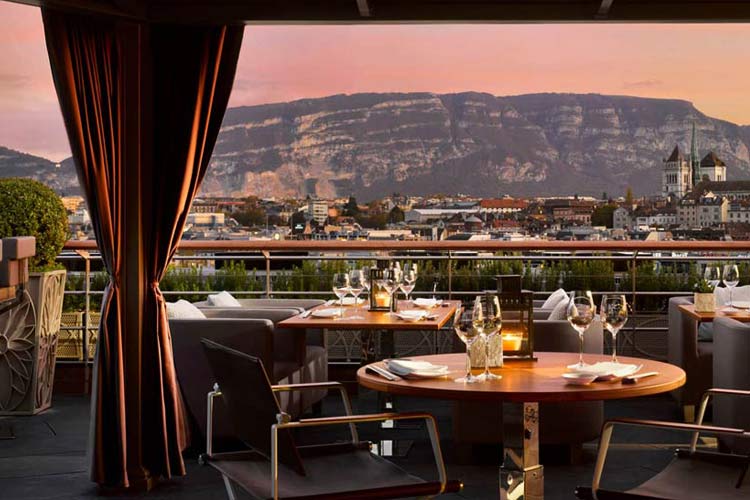
A rooftop terrace is furnished once. Whatever arrives on the lift on installation day is what the venue lives with for years, because getting it back down again costs almost as much as getting it up.
That single fact changes how the good operators plan. The furniture decision happens months ahead, on paper, and the venues that get it right treat it as a technical problem rather than a styling one.
Four things separate a rooftop from any other outdoor space.
Wind, which behaves differently at height and will move a lightweight chair across a terrace in a way it never would at ground level. Weight limits, because the structure below has a loading capacity and a stone planter is heavier than anybody expects. Access, since everything has to come up a service lift or a stair. And fixings, because you often cannot drill into a waterproof membrane without voiding a warranty.
None of that is visible in a furniture catalogue. All of it decides what can actually sit up there.
The commercial question is simpler than the design question. How many people can sit on this roof, comfortably, with staff able to move between them.
Packing the terrace produces a venue that is unpleasant in practice, because a server carrying four drinks cannot get past a pulled out chair. Spacing it generously produces a terrace with a lovely atmosphere and a revenue problem on the one hundred evenings a year when the weather cooperates.
The layout that works is usually found by testing several, and testing them on a drawing rather than on the roof.
This is the part that has changed in the last few years. Furniture brands now supply outdoor furniture 3D models of their ranges, built at real dimensions, and a designer can drop them into a model of the actual terrace.
That turns several expensive questions into cheap ones.
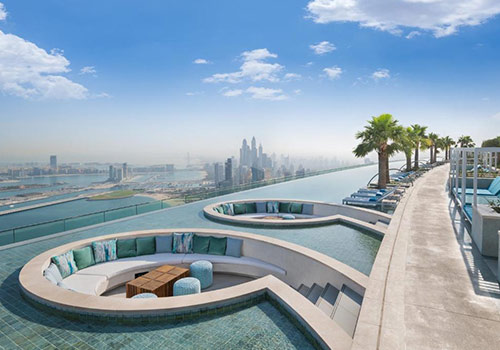
Whether the lounge set leaves a service route to the bar. Whether the planters that screen the neighbors also block the view people are paying for. What the terrace looks like from the entry point, which is where a guest decides whether the place is worth the lift ride. How much of it is in shade at seven in the evening in June, which is the hour that matters most.
The venues that skip this stage tend to discover the answers after delivery, when the fix is a reorder rather than a drag and drop.
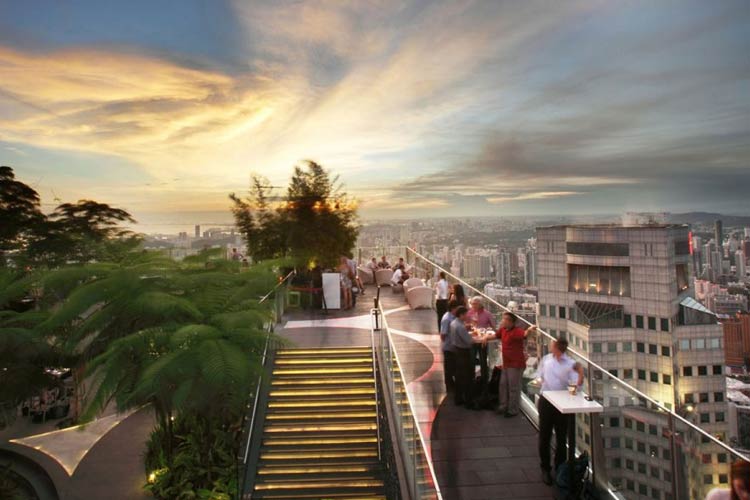
Standing at the door. Look at the terrace from the point a guest first sees it. A layout optimized on plan often reads as a car park from that angle.
Circulation with chairs pulled out. Plans show furniture in its parked position. Real terraces run with chairs at an angle and bags on the floor.
The view from the worst seat. Every venue has one. Knowing which table it is before opening lets you price it or plant something in front of it.
Sun and shade at two times of day. Late afternoon and early evening, in the months you actually trade.
The route from the lift. Every piece has to travel it. A ten foot table that cannot make the turn at the top of the stair is a well documented category of mistake.
Modelling does not replace a wind assessment, a structural check on loadings, or a conversation with whoever maintains the roof membrane. Those are specialist jobs and no picture substitutes for them.
It also does not tell you how the furniture feels. Comfort, the temperature of a metal armrest in direct sun, how a fabric handles a wet night. Order samples and sit on them.
What the model does is stop you buying the wrong quantity of the wrong thing, which is the error that shows up in the accounts rather than in the reviews.
Talk to enough rooftop operators and a pattern appears. Year one is the planned furniture. Year two is the correction: a dozen more chairs because the layout seated fewer people than the projection assumed, or a set of screens because the wind made a corner unusable.
That correction is the real cost of skipping the planning stage, and it rarely appears in the original budget. It is also entirely avoidable, which is why the practice of testing the layout in three dimensions has spread from big hotel groups to independent venues in a fairly short time.
A rooftop gets one installation day. It is worth knowing what is going to happen on it.
Browse all the cities & articles at The Rooftop Guide


Follow The Rooftop Guide